Post-Purchase Behavior: Definition, Outcomes, & Steps

Last Updated: February 2026
Post-purchase behavior directly influences customer retention, return rates, and long-term brand loyalty. Businesses that understand what happens after a customer completes a transaction can reduce costly returns, improve satisfaction, and increase customer lifetime value.
Whether you operate in ecommerce, retail, or B2B commerce, optimizing the post-purchase experience is essential to reducing friction and strengthening trust.
Key Takeaways
- Post-purchase behavior influences retention, return rates, and brand reputation.
- Cognitive dissonance is a primary driver of post-purchase regret.
- Clear product information reduces expectation mismatch.
- Transparent returns processes protect long-term loyalty.
- Monitoring behavioral metrics improves lifetime value.
Post-purchase experience is not an operational afterthought — it is a strategic growth lever.
What is Post-Purchase Behavior?
Post-purchase behavior refers to the actions, attitudes, and decision-making processes a customer experiences after completing a purchase.
It typically includes:
- Product evaluation
- Cognitive dissonance (buyer’s remorse)
- Usage experience
- Customer support interaction
- Reviews and referrals
- Repeat purchase or churn
- Product return or exchange
Understanding these behaviors allows businesses to influence satisfaction, reduce negative outcomes, and encourage loyalty.

Why is Post-Purchase Behavior Important for eCommerce?
Post-purchase behavior impacts three core business outcomes:
- Return Rates
- Customer Retention
- Brand Advocacy
If expectations are not met, customers are more likely to:
- Initiate returns
- Leave negative reviews
- Avoid repeat purchases
- Share negative experiences publicly
Conversely, when expectations are aligned and supported post-sale, customers are more likely to:
- Leave positive reviews
- Recommend the brand
- Purchase again
- Become long-term customers
Post-purchase experience is a revenue protection strategy.
What Are the Stages of Post-Purchase Behavior?
Most post-purchase journeys follow five stages:
1. Expectation Confirmation
The customer compares the product or service against what was promised.
2. Cognitive Dissonance
The customer questions whether they made the right choice. This stage is especially common in high-consideration purchases.
3. Product Usage and Evaluation
The customer assesses usability, quality, and overall value.
4. Behavioral Response
This may include:
- Leaving a review
- Contacting support
- Initiating a return
- Sharing feedback
5. Loyalty or Exit
The customer either becomes a repeat buyer or disengages.
Businesses that intervene early — particularly during cognitive dissonance — can significantly reduce return rates.
What Causes Negative Post-Purchase Behavior?
Several factors influence post-purchase dissatisfaction:
- Misaligned expectations
- Inaccurate product descriptions
- Poor fit or usability
- Delayed shipping
- Complex return processes
- Lack of post-purchase communication
In eCommerce environments, unclear sizing information and inconsistent product imagery are common contributors to regret and returns.
Reducing negative post-purchase outcomes requires accurate product data, clear communication, and frictionless support systems.
Businesses without visible returns analytics have 10–42% more complex returns lifecycles – risking poor customer satisfaction.

How Does Post-Purchase Behavior Affect Return Rates?
Returns are often a behavioral outcome rather than purely a product failure.
Common behavioral triggers for returns include:
- Buyer’s remorse
- Mismatch between product description and reality
- Ease of return policy encouraging low-friction returns
- Delayed delivery impacting urgency or need
Businesses that provide:
- Transparent product information
- Real-time shipping updates
- Clear onboarding instructions
- Hassle-free but structured return processes
can reduce unnecessary returns while maintaining customer trust.
How Can Businesses Improve Post-Purchase Satisfaction?
Improving post-purchase outcomes requires intentional strategy.
1. Align Expectations Pre-Purchase
Clear descriptions, sizing charts, and realistic imagery reduce regret.
2. Provide Immediate Confirmation
Send detailed confirmation emails including:
- Order summary
- Delivery timeline
- Support contact information
3. Proactive Communication
Notify customers of:
- Shipping updates
- Delivery confirmation
- Setup instructions
- Care instructions
4. Simplify Returns Without Encouraging Abuse
Offer transparent return policies with structured workflows.
5. Collect and Analyze Feedback
Reviews and return reasons provide behavioral insights that can improve product listings and reduce future dissatisfaction.
Post-Purchase Behavior vs Pre-Purchase Behavior
| Pre-Purchase Behavior | Post-Purchase Behavior |
|---|---|
| Product research | Product evaluation |
| Price comparison | Value assessment |
| Brand consideration | Brand trust confirmation |
| Cart decision | Repeat purchase decision |
| Purchase intent | Loyalty or churn |
While marketing typically focuses on influencing pre-purchase decisions, long-term profitability is heavily shaped by post-purchase outcomes.
Key Metrics That Measure Post-Purchase Success
Organizations should monitor:
- Return rate
- Repeat purchase rate
- Customer lifetime value (CLV)
- Net Promoter Score (NPS)
- Review sentiment trends
- Time-to-resolution for support issues
Tracking these metrics allows businesses to identify behavioral friction points in the customer journey.
The Role of Returns Management in Post-Purchase Behavior
Returns management is a critical touchpoint in post-purchase experience.
An optimized returns process should:
- Provide clear instructions
- Offer status tracking
- Minimize refund delays
- Capture structured return reasons
- Maintain consistent communication
A transparent, efficient returns process can convert a negative experience into a loyalty-building moment.
ReverseLogix RMS users have improved customer satisfaction 15-25% on average.
Returns management software not only impacts the efficiency and cost savings of processing returns, but it’s also a game-changer for responding to post-purchase behavior. View our pricing plans or request a demo today.
Post-purchase behavior shapes whether a transaction becomes a long-term relationship or a one-time sale.
By proactively managing expectations, improving communication, and optimizing returns workflows, businesses can reduce friction, strengthen trust, and increase lifetime value.
Organizations that treat post-purchase experience as a strategic growth driver — rather than a reactive support function — position themselves for sustainable customer retention.

Frequently Asked Questions (FAQ)
Post-purchase behavior refers to the decisions and actions customers take after completing a purchase, including evaluating the product, leaving reviews, initiating returns, or making repeat purchases.
Buyer’s remorse, or cognitive dissonance, occurs when customers question whether they made the right decision. It is common in high-cost or high-consideration purchases and often results from unmet expectations.
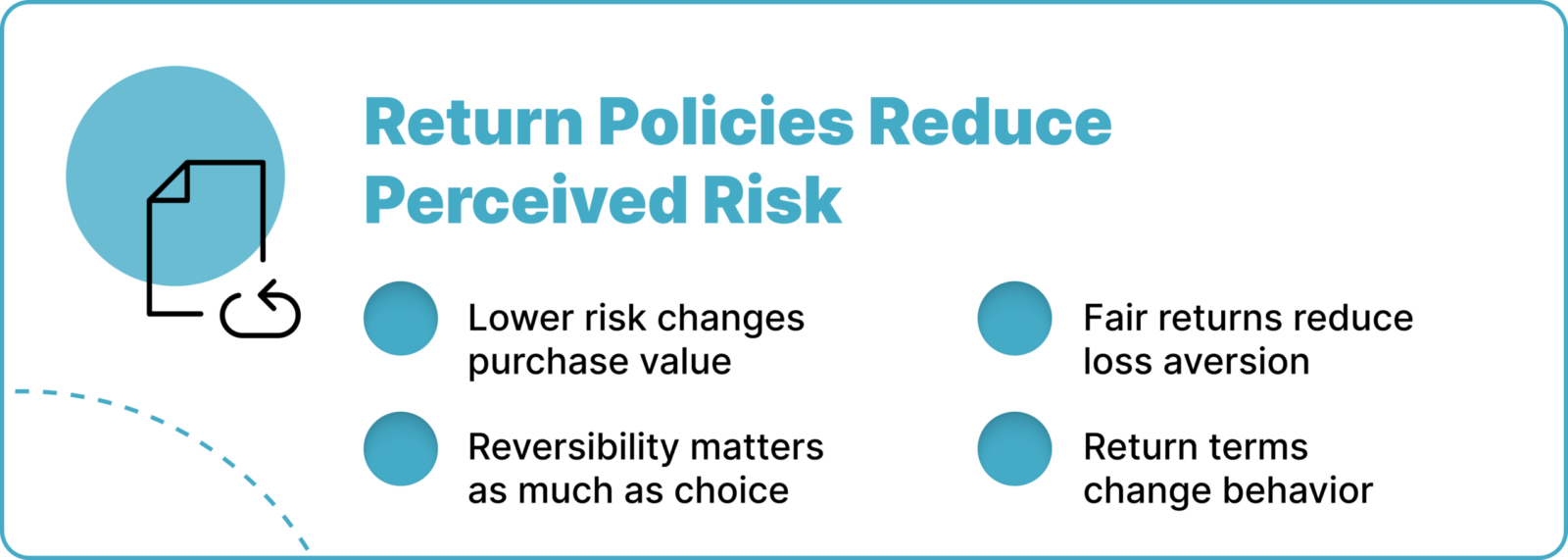
Clear and transparent return policies reduce anxiety and increase trust. However, overly lenient policies without structure may increase return rates.
Apparel, footwear, electronics, and high-consideration ecommerce categories typically experience strong post-purchase behavioral influence due to fit, usability, or specification mismatch.
Technology platforms can:
Automate communication
Provide structured returns workflows
Capture return data insights
Identify behavioral patterns driving dissatisfaction
High return rates, low repeat purchase rates, negative review sentiment, and increased support tickets are common indicators.
Picture the moment a customer receives a product. That delivery does not mark the end of their journey; it marks the beginning of a critical phase where their experience after purchase will shape whether they return, recommend, or buy again. What a customer does next, how they feel, react, and engage with your brand post-purchase, creates a measurable effect on loyalty, reputation, and future revenue.
Every purchase carries a psychological imprint. When expectations are met, customers feel satisfied and confident in their decision. When they are not, doubt and regret can surface. That discomfort, often called post-purchase dissonance, can lead to returns, negative feedback, and weakened trust. Understanding this behavior allows businesses to anticipate these reactions instead of simply responding after damage is done.
Outcomes after a sale typically follow three paths. In the best case, the product meets expectations and the customer feels validated. In other cases, dissonance appears, particularly with high-value purchases, emotionally significant items, or products that are complex or unfamiliar. A lack of clear information before purchase can amplify that uncertainty. The third path is long-term loyalty, which develops when the overall experience, including service and support, reinforces the customer’s confidence in the brand.
Reducing regret and encouraging repeat business requires attention beyond checkout. The post-purchase journey includes confirmation emails, shipping updates, delivery timing, product usage, customer support interactions, and, when necessary, returns. Each of these touchpoints shapes perception. Clear communication plays a central role. Real-time tracking, straightforward policies, and accessible support channels reduce uncertainty and reassure customers that they remain a priority.
Returns policies deserve particular focus. When instructions are simple and expectations are clearly stated, customers experience less anxiety. Knowing how to initiate a return, how long refunds may take, and what steps are involved removes friction from an already sensitive moment. Even small gestures such as follow-up communication, care instructions, or appreciation messages help maintain goodwill, regardless of whether the customer keeps the product.
Customer reviews also influence post-purchase behavior. They set expectations before a transaction even occurs. Honest feedback provides prospective buyers with a clearer understanding of product performance and service quality, which reduces the likelihood of disappointment later. Accurate expectations before purchase often translate into fewer returns afterward.
Returns data itself offers insight. Patterns in return reasons, such as sizing issues or unmet expectations, can guide improvements in product design, descriptions, photography, and packaging. When businesses examine these trends carefully, they gain actionable information that improves both operational efficiency and customer satisfaction.
Importantly, a return does not automatically signal a lost customer. When handled efficiently and respectfully, the experience can strengthen trust. A streamlined, transparent return process demonstrates reliability. Customers who feel treated fairly during a problem are often willing to purchase again.
In competitive markets, companies that manage post-purchase interactions with discipline and clarity stand out. Returns and follow-up processes are not isolated operational tasks; they are part of the broader customer experience. Treating them strategically supports retention, protects margins, and builds long-term relationships grounded in trust.
If you are looking to strengthen your post-purchase operations and create a returns experience that supports both customer loyalty and operational control, consider signing up for a free ReverseLogix demo to see how a purpose-built returns management platform can support your business.
Get a Demo
Discover how you can jump-start your returns management efforts with ReverseLogix.